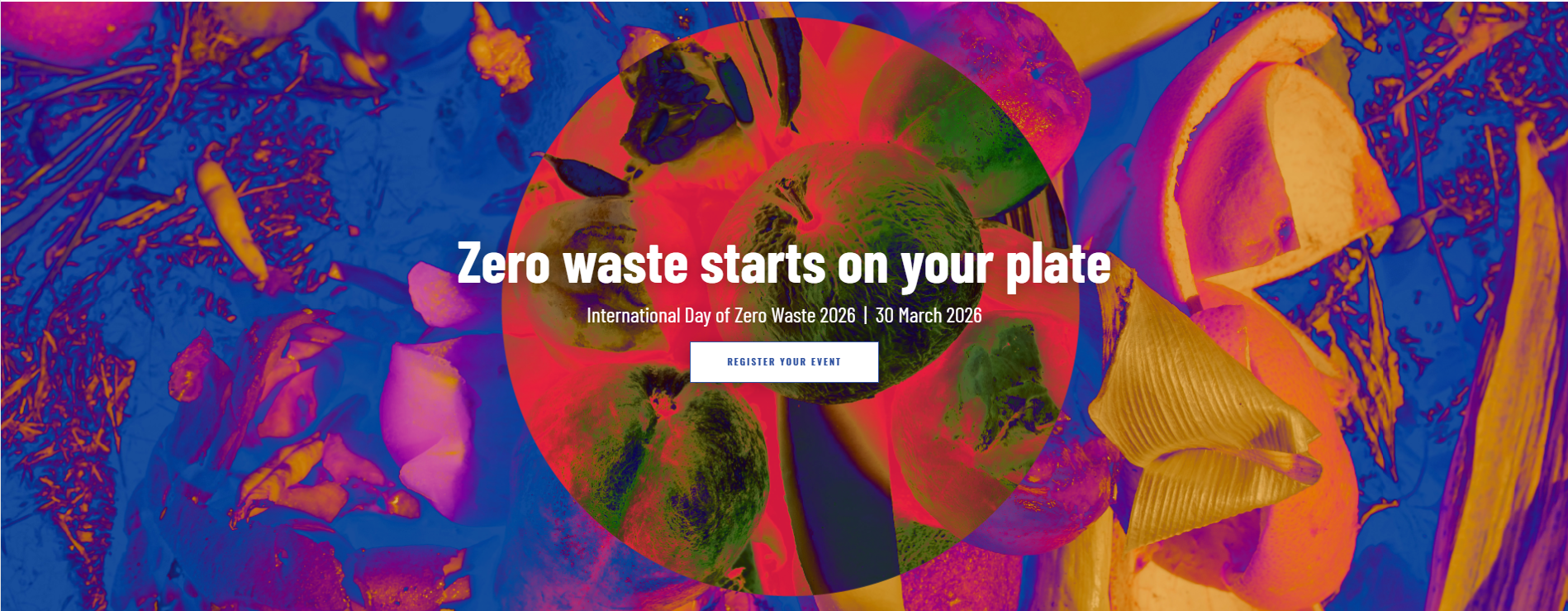
Every year, millions of tonnes of food end up in the bin, even though they could have been used. On the occasion of the International Day of Zero Waste, which was established by the United Nations in December 2022 and is celebrated every year on 30 March, efforts are strengthened to raise public awareness on waste reduction.
This initiative aims to promote sustainable consumption and production patterns, as well as support zero-waste actions, contributing to the achievement of the United Nations Sustainable Development Goals (SDGs).
In Cyprus, the LIFE IP CYzero WASTE project actively contributes to the transition towards a zero-waste culture. Through awareness-raising actions and collaborations with local authorities, businesses, and citizens, it promotes practices that contribute to:
- reducing waste generation,
- reuse and recycling,
- strengthening the circular economy,
- and reducing food waste.
Within this framework, the LIFE IP CYzero WASTE project highlights the importance of reducing food waste and actively participates in awareness and best practice exchange actions.
As part of the project’s activities, Action C4 – Prevention of Food Waste and Agricultural Waste Generation is being implemented, aiming at:
- assessing the current situation and annual generation of food and agricultural waste in Cyprus,
- developing and operating a monitoring and management platform for the prevention of food and agricultural waste,
- as well as implementing demonstration actions that promote the prevention of food and agricultural waste generation.
The International Day of Zero Waste is a global United Nations initiative that invites us to rethink how we consume and manage our waste. This year’s campaign message is:
“Zero waste starts on your plate.”
This message reminds us that reducing food waste is a key step towards protecting the environment and transitioning to a more sustainable society.
Change starts from our daily habits – from the way we shop, store, and consume food.
Food waste is a global issue
Globally, food waste remains alarmingly high. In 2022, approximately 1.05 billion tonnes of food were lost or wasted, representing around 19% of the food available to consumers.
At the same time, food loss and waste account for approximately 8–10% of global greenhouse gas emissions, while a large portion of this waste ends up in landfills, where methane is produced.
Reducing food waste is therefore one of the most immediate and effective actions for protecting the climate and natural resources.
Contribution of the Department of Environment
In the framework of the International Day of Zero Waste, the LIFE IP CYzero WASTE project participates in a workshop organised by the Department of Environment under the project: “Programme for the reduction of municipal solid waste from coastal hotel units and related waste-generating activities in the districts of Limassol and Paphos”.
The project is implemented in the districts of Limassol and Paphos and aims at the proper management of waste generated by the hospitality and catering sector. This sector produces large quantities of waste on a daily basis, especially organic waste such as food leftovers and raw materials.
Through waste separation at source, separate collection of recyclables, and the utilisation of organic waste, the amount of waste sent to landfills is significantly reduced.
Within this framework, the Department of Environment is proceeding with the installation of modern equipment such as organic waste bins, compactors and paper balers, waste collection trucks, and other collection vehicles. At the same time, awareness and training actions are carried out for local authorities and participating businesses to ensure the proper and effective implementation of new practices.
With a total budget of €10.5 million, the project is implemented under the Cohesion Policy Programme “THALIA 2021–2027”, co-funded by the European Union, contributing significantly to the achievement of national and European targets for recycling, composting, and waste diversion from landfills.
The workshop which is scheduled for 27th of March 2023, is titled:
“Practices and tools for reducing food waste in the catering and hospitality sector”
and aims to inform and raise awareness among professionals in the sector, as well as present practical solutions and tools to reduce food waste.
Food waste affects the environment, the economy, and society. With simple changes in our daily habits, we can significantly reduce the amount of food that ends up in the bin.
🎥 Watch the awareness video here and learn how you too can contribute to reducing food waste
What can we all do
Reducing food waste is not only the responsibility of businesses or authorities – it concerns all of us. A few simple steps can make a difference:
- Plan your shopping.
- Store food properly.
- Use leftovers creatively.
- Share food you will not consume.
With small everyday choices, we can contribute to a more sustainable future.
The International Day of Zero Waste, established by the United Nations General Assembly, brings together governments, businesses, and citizens to promote circular economy solutions and reduce waste.
For more information, you can consult the relevant information brief for this year’s International Day of Zero Waste, which outlines ways to get involved and key messages to be promoted through communication channels:
🔗 https://www.unep.org/zerowasteday